

VAT Return in Saudi Arabia: A Practical Guide to Preparing and Filing with ZATCA
Preparing a VAT return is an important responsibility for businesses registered for VAT in Saudi Arabia. However, submitting a return is not simply about entering figures into the Zakat, Tax and Customs Authority (ZATCA) portal. It requires accurate accounting records, properly issued tax invoices, correct VAT treatment and a thorough review of financial transactions.
Even a small reporting difference can create questions during a VAT review. Missing sales invoices, incorrect VAT codes, duplicate purchase entries and unreconciled accounting balances are common issues businesses should identify before submitting their returns.
In this guide, we explain the key steps involved in preparing a VAT return in Saudi Arabia, common reporting mistakes and how businesses can improve their VAT reporting process.
Preparing a VAT return in Saudi Arabia requires businesses to maintain accurate financial records, review VAT transactions and reconcile their accounting reports before submission.
Understanding VAT Returns in Saudi Arabia
A VAT return is a report submitted by a VAT-registered business to ZATCA. It summarises the business’s VAT-related transactions for a specific tax period.
The return generally includes information about:
- Sales and other transactions subject to VAT.
- Output VAT collected on taxable sales.
- Purchases and expenses that may qualify for input VAT recovery.
- Adjustments and other VAT-related amounts.
- The resulting VAT payable or refundable, as applicable.
Therefore, businesses should ensure that the information reported in their VAT return agrees with their accounting records and supporting documentation.
For current filing requirements, businesses should always refer to the latest ZATCA regulations and official guidance.
7 Steps to Prepare a VAT Return in Saudi Arabia
Preparing a VAT return systematically can help reduce reporting errors and improve compliance. The following steps provide a practical starting point.
1. Review Your Sales Transactions
Start by reviewing all sales transactions recorded during the relevant tax period.
Check that:
- Sales invoices are recorded in the correct period.
- Taxable sales are classified correctly.
- VAT has been calculated using the appropriate tax treatment.
- Credit notes and debit notes are properly recorded.
- Cancelled or adjusted invoices are reflected correctly.
Additionally, pay particular attention to differences between sales reports, accounting records and VAT reports.
A reconciliation at this stage can help identify missing invoices or transactions recorded under incorrect VAT categories.
2. Verify Purchase Invoices and Input VAT
The next step is to review purchase invoices and expenses recorded during the reporting period.
Not every expense automatically qualifies for input VAT recovery. Businesses should review the nature of each expense, the supporting tax invoice and the applicable VAT recovery conditions.
Important checks include:
- Confirming that supplier invoices contain the required information.
- Checking supplier VAT registration details where relevant.
- Verifying the VAT amount shown on each invoice.
- Identifying duplicate invoices.
- Reviewing expenses that may be subject to input VAT restrictions.
- Ensuring purchase transactions are recorded in the correct period.
In addition, maintaining organised purchase records makes VAT reconciliation easier and supports the business if ZATCA requests additional information.

3. Reconcile Input VAT and Output VAT
VAT reconciliation is one of the most important parts of VAT return preparation.
Businesses should compare the VAT figures in their accounting software with the amounts included in the VAT return.
Net VAT = Output VAT − Recoverable Input VAT
For example:
- Output VAT: SAR 50,000
- Recoverable Input VAT: SAR 30,000
- Simplified net VAT payable: SAR 20,000
This is an illustrative calculation only. Actual VAT reporting may also involve adjustments, different transaction categories and other applicable rules.
A proper reconciliation should explain differences between the VAT report, general ledger and supporting documents.
4. Identify Missing or Duplicate Invoices
Missing and duplicate invoices can affect the accuracy of a VAT return.
For example, a business may record a supplier invoice in its accounting system but fail to include it in the relevant VAT report. Similarly, an invoice may be entered twice, resulting in an incorrect purchase or VAT balance.
To avoid reporting errors, review the following before filing:
- Sales invoice sequences.
- Purchase invoice records.
- Credit notes and debit notes.
- Duplicate transaction entries.
- Transactions appearing in accounting records but missing from VAT reports.
If an invoice is missing, determine the correct VAT treatment and reporting period using the applicable ZATCA rules. Do not simply adjust figures without supporting documentation.
5. Review Your Accounting Software and VAT Settings
Accounting software can make VAT reporting more efficient, but only when it is configured correctly.
Businesses in Saudi Arabia may use platforms such as Zoho Books, Odoo, QuickBooks and Wafeeq to manage their accounting and financial records.
Before preparing the VAT return, review:
- VAT tax rates and tax codes.
- Sales and purchase account mappings.
- Customer and supplier tax information.
- Tax invoice settings.
- Credit note treatment.
- VAT reports and general ledger balances.
Incorrect tax settings can affect multiple transactions, so it is important to review the configuration regularly.
6. Investigate Differences in VAT Reconciliation
If the VAT report does not agree with the accounting records, investigate the reason before submitting the return.
Common causes include:
- Missing or incorrectly recorded invoices.
- Transactions posted in the wrong tax period.
- Incorrect VAT tax codes.
- Duplicate purchase or sales entries.
- Manual journal entries affecting VAT accounts.
- Differences between accounting reports and VAT reports.
For example, if the accounting system shows a different output VAT balance from the VAT return report, review the underlying sales transactions and tax classifications.
As a result, documenting the reason for each difference helps maintain reliable financial records and supports future reviews.
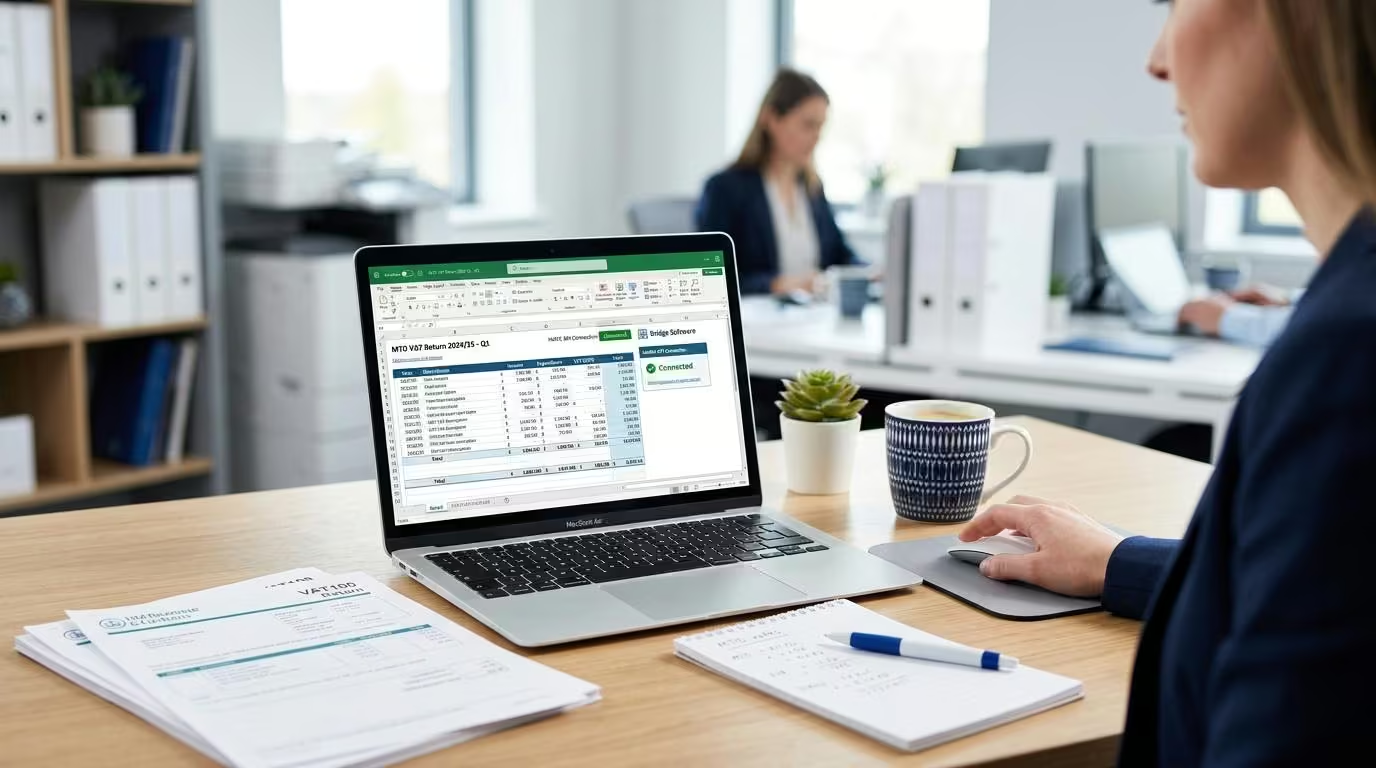
7. Review and Submit the VAT Return
Once the reconciliation is complete, perform a final review of the VAT return.
Check that:
- Sales and purchase figures are supported by accounting records.
- VAT calculations have been reviewed.
- Adjustments are properly documented.
- Differences have been investigated.
- Supporting invoices and records are available.
- The return has been reviewed by an authorised person.
After completing the necessary checks, submit the VAT return through the official ZATCA platform within the applicable deadline.
Official reference: ZATCA – VAT Return Service: https://zatca.gov.sa/en/eServices/Pages/eservices-009.aspx
Common VAT Reporting Mistakes Businesses Should Avoid
Businesses can improve their VAT reporting process by paying attention to common mistakes, including:
Missing or Incorrect VAT Invoices:
Applying the wrong tax treatment to sales or purchases can affect the reported figures.
Incorrect VAT Classification:
Incomplete purchase records may lead to inaccurate input VAT reporting.
Duplicate Transactions:
Recording an invoice more than once can distort accounting and VAT balances.
Poor VAT Reconciliation:
Submitting a return without investigating differences between the accounting records and VAT report can create reporting risks.
Incorrect Accounting Software Settings:
Wrong tax codes or account mappings may result in inaccurate VAT reports.
Weak documentation:
Businesses should maintain appropriate invoices, supporting records and reconciliation workings.
By following these checks, businesses can identify common reporting issues before filing.
How Finance Fix Supports Businesses in Saudi Arabia
Managing VAT reporting alongside daily business operations can be challenging, particularly when accounting records are incomplete or transactions are not properly reconciled.
Finance Fix supports businesses in Saudi Arabia with accounting and financial management services, including:
- Bookkeeping and accounting: Maintaining organised financial records and recording business transactions.
- VAT and tax support: Assistance with VAT-related accounting, reporting and compliance processes.
- VAT reconciliation: Reviewing input VAT, output VAT and differences between accounting records and VAT reports.
- Financial reporting: Preparing and reviewing financial information to support business decisions.
- Accounting software support: Assistance with accounting platforms such as Zoho Books, Odoo, QuickBooks and Wafeq.
- Outsourced accounting: Supporting businesses that need ongoing accounting assistance.
Our aim is to help businesses maintain reliable financial records and improve their accounting and reporting processes.
Explore our accounting, bookkeeping and VAT services to understand how Finance Fix can support your business in Saudi Arabia.
Need Professional Support With Your VAT Reporting?
Are you experiencing VAT reconciliation differences, missing invoices or difficulties preparing your VAT return?
Finance Fix can help your business review its accounting records, organise VAT-related information and improve its reporting process.
Whether you need assistance with bookkeeping, VAT reconciliation or ongoing accounting support, our team is ready to discuss your requirements.
Request a quotation from Finance Fix and let us understand how we can support your business.
Website: https://finance-fix.com/ | Services: https://finance-fix.com/services/
Looking for professional support with VAT preparation, reconciliation or accounting? Contact Finance Fix to discuss your business requirements and request a tailored quotation.